By Dr. Stephanie (Zwonitzer) Anderson, DNP · Revive Institute of Sexual Health · Oct 13, 2026
Hot flashes at 3 a.m. Brain fog in the middle of a meeting. A libido that quietly packed its bags and left without a note. If perimenopause or menopause is running your life right now, you’ve probably heard about “bioidentical hormones” — usually attached to a sales pitch.
Let’s cut through the noise. I’m Dr. Stephanie (Zwonitzer) Anderson, DNP, and I help Maryland adults get their hormones — and their sex lives — back on track through telehealth. Here’s what bioidentical hormone replacement therapy (BHRT) actually is, what the research supports, where the hype outruns the evidence, and how to figure out if it’s right for you.
The Quick Version
- BHRT uses hormones that are molecularly identical to the estrogen, progesterone, and testosterone your body makes.
- Many bioidentical hormones are FDA-approved. Estradiol patches, gels, and pills plus micronized progesterone capsules are all bioidentical. You don’t need a custom compound to go “bioidentical.”
- Compounded hormones (custom creams, troches, pellets) aren’t FDA-approved, and there’s no evidence they’re safer or more effective than approved options.
- For most healthy women under 60 or within 10 years of menopause, the benefits of hormone therapy often outweigh the risks. But the right answer depends on you.
What “Bioidentical” Really Means
“Bioidentical” describes a hormone’s structure, not where it came from. These hormones are made in a lab — often from soy or wild yam, so they match human estradiol, progesterone, and testosterone molecule for molecule.
“Natural,” on the other hand, is a marketing word. Plant-derived doesn’t automatically mean identical to your hormones, and it definitely doesn’t mean safer.
Here’s the part the wellness industry doesn’t love to mention: plenty of conventional prescriptions are already bioidentical. 17β-estradiol and micronized progesterone are FDA-approved, standardized, and backed by clinical trials. (Estriol shows up in some compounded blends, but it isn’t FDA-approved for hormone therapy.)
Traditional vs. Bioidentical vs. Compounded
| Traditional HRT | FDA-Approved Bioidentical | Compounded Bioidentical | |
| Hormone source | Synthetic or animal-derived | Plant-derived, identical to human hormones | Plant-derived, identical to human hormones |
| FDA-approved | Yes | Yes | No |
| Dose consistency | Standardized | Standardized | Varies batch to batch |
| Clinical trial data | Extensive | Substantial | Limited |
| Examples | Premarin, medroxyprogesterone (MPA) | Estradiol patch/gel/pill, micronized progesterone | Custom creams, troches, pellets |
Much of the older research — including the famous Women’s Health Initiative (WHI) — studied the traditional combo of conjugated equine estrogens and MPA. That matters, because newer bioidentical options may behave differently, especially when estrogen goes through the skin.
Compounding does have a place: an allergy to an ingredient in a commercial product, or a dose that doesn’t exist off the shelf. But “custom” doesn’t mean “better.”
What BHRT Can Do for You
When it’s dosed thoughtfully and monitored, hormone therapy can be life-changing. Here’s what the evidence supports:
- Hot flashes and night sweats. Hormone therapy is still the most effective treatment we have. Most women with moderate-to-severe symptoms see a big drop in how often and how hard they hit.
- Sleep. Fewer night sweats means fewer 3 a.m. wake-ups — and a lot more patience the next day.
- Vaginal dryness and painful sex. Estrogen reliably restores comfort, whether it’s systemic or a low-dose vaginal form.
- Bone protection. Hormone therapy lowers osteoporosis and fracture risk, especially when started near menopause.
- Desire. Optimized estrogen — and, for some women, low-dose testosterone — can bring desire and arousal back online. Heads up: there’s still no FDA-approved testosterone product for women, so it’s prescribed off-label with careful monitoring.
- Mood and brain fog. Many women feel sharper and steadier. The evidence is mixed, though, and BHRT isn’t a stand-alone treatment for depression.
The Real Risks (No Fear-Mongering, No Sugarcoating)
Every medication has trade-offs, and hormones are no exception. Your age, how long it’s been since menopause, the form you use, and your personal and family history all shift the math.
- Breast cancer. In the WHI’s estrogen-plus-progestin trial (about 16,600 women), combined therapy was linked to a small increase — roughly 8 extra cases per 10,000 women per year. Estrogen-only therapy (for women without a uterus) didn’t show that increase and may even lower risk over the long haul.
- Blood clots and stroke. Oral estrogen raises clot risk. Estrogen through the skin (patch, gel, injection) appears to carry lower risk, and absolute risk stays low for younger women.
- Heart health. Timing matters. Starting before 60 or within 10 years of menopause looks favorable; starting many years later raises more concerns.
- Uterine lining. Estrogen alone thickens the uterine lining and raises endometrial cancer risk. If you have a uterus, progesterone is non-negotiable.
- Other side effects. Breast tenderness, spotting, bloating, mood changes, and gallbladder issues are possible.
The big 2026 update: In February 2026, the FDA approved labeling changes that pulled cardiovascular disease, breast cancer, and probable dementia out of the “boxed warning” on menopausal hormone therapy products (FDA announcement). Translation: the FDA agrees those old warnings overstated the risk for many women. The risks still exist and still appear on the label — but the conversation is finally based on evidence instead of fear.
The standard of care hasn’t changed: the lowest dose that controls your symptoms, reviewed regularly.
Pellets and Compounded Hormones: My Honest Take
Hormone pellets are everywhere right now. They’re tucked under the skin and release hormones over three to six months. Convenient? Sure. But once a pellet is in, it’s in. If your levels run too high or side effects kick in, there’s no dialing it back — and levels well above normal physiology are a real concern.
The research on pellets is mostly small, non-randomized studies. That’s why The Menopause Society, ACOG, and the Endocrine Society all recommend FDA-approved options first.
That’s my approach too. I start with FDA-approved bioidentical hormones and only consider compounding when there’s a specific clinical reason — with a full informed-consent conversation about the trade-offs. Because we are telehealth based, we do not offer pellets.
One more myth to bust: saliva hormone testing isn’t validated for dosing. I use blood work.
Is BHRT Right for You?
You may be a good candidate if you:
- Are in perimenopause or within 10 years of menopause
- Have moderate-to-severe hot flashes, night sweats, sleep problems, mood shifts, or painful sex
- Don’t have any major red flags (below)
Systemic hormones are usually off the table if you have:
- Unexplained vaginal bleeding
These need a deeper conversation — not an automatic no: heart disease (including uncontrolled high blood pressure or stroke), a strong family history of breast cancer, a personal history of estrogen-sensitive cancer, migraine with aura, or obesity.
Not a fit for systemic hormones? You still have options: low-dose vaginal estrogen, non-hormonal prescriptions for hot flashes (certain SSRIs/SNRIs, gabapentin, and newer medications made specifically for hot flashes), non-estrogen vaginal treatments like ospemifene or prasterone, and good old moisturizers and lube.
And guys — testosterone replacement for low T is its own evidence-based conversation, separate from menopausal BHRT.
Your Delivery Options
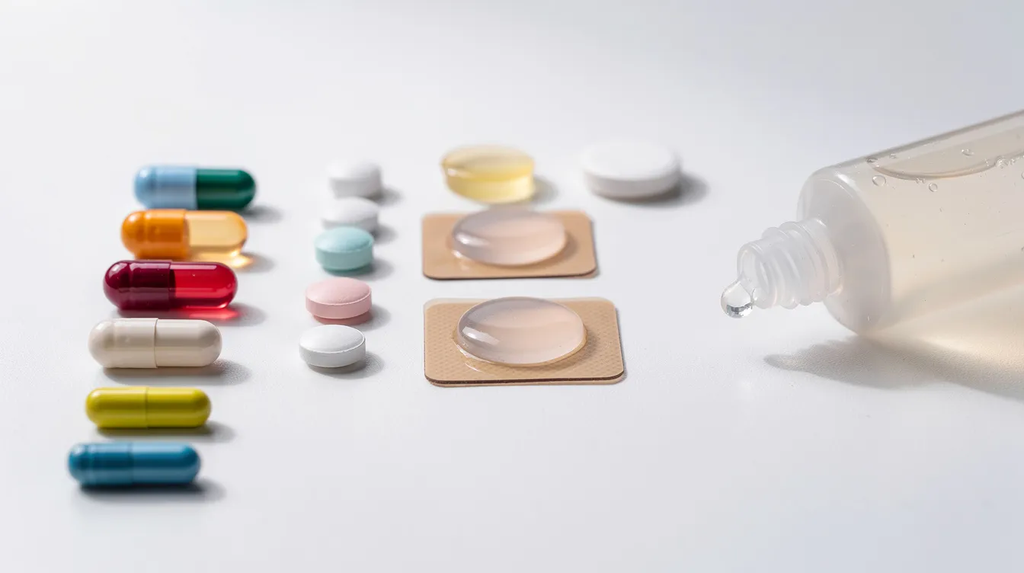
- Systemic estradiol — patch, gel, injection, or pill. Skin-based forms skip the liver’s first pass and appear to carry lower clot risk, which makes them my go-to for many women.
- Low-dose vaginal estrogen — cream, ring, or tablet. Treats dryness, painful sex, and urinary symptoms with minimal absorption into the rest of the body.
- Oral micronized progesterone — the bioidentical choice for protecting the uterine lining if you have a uterus. But even without a uterus it has great benefits for you.
- Low-dose testosterone — transdermal or injectable, off-label, for women with low desire, with monitoring.
Dosing can be continuous or cyclic, depending on your bleeding pattern, how you tolerate it, and what fits your life.
How BHRT Works at Revive (Maryland Telehealth)
At Revive Institute of Sexual Health, you’re not squeezed into a 10-minute slot. You work directly with me — every visit, every message, every dose adjustment — from wherever you are in Maryland: Baltimore, Annapolis, Frederick, Rockville, or the Eastern Shore.
- An unhurried first visit. We dig into your symptoms, cycle history, sleep, mood, libido, relationship, and medical and family history.
- Labs near you. Blood work at a Maryland draw site: estradiol, progesterone, testosterone, thyroid, vitamin D and B12, lipids, and metabolic markers. Labs inform the plan; your symptoms lead it.
- Your personalized plan. Prescriptions go electronically to a Maryland pharmacy, with FDA-approved options first.
- Real follow-through. Labs at the three-month mark, then quarterly check-ins while we fine-tune, plus an annual comprehensive review. Appointments when you need them to discuss your questions, concerns, or changes in symptoms. Your mammograms and pelvic exams stay with your local providers.
Care starts with Revive Foundation and continues through Vitality Membership. Sexual wellness is built in, not bolted on — painful sex, low desire, and how all of this is landing in your relationship are part of the conversation.
Hormones work best on a solid foundation, so we also look at sleep, nutrition, strength training, stress, and alcohol. When it helps, I’ll refer you to pelvic floor physical therapy or a sex therapist.

Frequently Asked Questions
Does insurance cover BHRT?
Revive is a direct-pay practice — no insurance billing, no prior authorizations, no rushed visits. Your prescriptions are separate: many FDA-approved options, like estradiol patches and micronized progesterone, are covered by commercial plans and Medicare Part D depending on your formulary. Compounded hormones and pellets usually aren’t. Check your pharmacy benefits before you start.
Do I need hormone testing? Are saliva tests accurate?
I use blood tests, not saliva. Saliva testing isn’t validated for guiding hormone dosing, and most expert organizations don’t recommend it. Labs help set a baseline and track your response, but your symptoms, history, and safety markers drive the decisions.
How long can I safely stay on BHRT?
There’s no universal expiration date. It depends on your age, your symptoms, your breast and heart risk, and the lowest dose that keeps you feeling good. Many women use systemic hormones for several years around menopause, then decide whether to taper, switch to vaginal estrogen only, or stop. Continuing past 60 can still be the right call when the benefits clearly outweigh the risks — we’d revisit that together every year.
Can I consider BHRT with a family history of breast cancer?
A family history doesn’t automatically rule you out, but it means a closer look: who had cancer, at what age, the tumor type, and any genetic testing. I may loop in a breast specialist or genetic counselor, and I lean toward the lowest effective dose through the skin. For very high inherited risk, non-hormonal options often come first, and low-dose vaginal estrogen may still be possible with your oncologist’s input.
How fast will I feel better?
Many women notice fewer hot flashes and night sweats within 2–4 weeks, with the full effect around 8–12 weeks. Libido, mood, and sleep can take a bit longer. We check in monthly at the beginning and then every three months to adjust. If things aren’t improving the way we expect, I look for other culprits like thyroid issues, sleep apnea, or relationship stress.
Ready to Feel Like Yourself Again?
You don’t have to white-knuckle your way through menopause. Book your consult by filling out the contact form at reviveish.com. Ask your questions or request a call to get scheduled, and let’s build a plan that fits your body, your history, and your life.
This article is for education only and isn’t a substitute for personalized medical advice.