By Dr. Stephanie (Zwonitzer) Anderson, DNP · Revive Institute of Sexual Health · Oct 13, 2026
Your period is suddenly freelancing. You’re wide awake at 3 a.m. for no reason. You walked into the kitchen and forgot why, twice. And you’re snapping at people you actually like.
You’re not losing it. You might be in perimenopause.
I’m Dr. Stephanie (Zwonitzer) Anderson, DNP, and one of the most common things I hear from women in their late 30s and 40s is, “Nobody told me it would start like this.” So let’s fix that. Here are the early signs, why they happen, and what you can do about them.
What Is Perimenopause?
Perimenopause is the transition leading up to menopause. Your ovaries start making estrogen and progesterone less predictably, so your levels swing up and down. That’s why symptoms come and go, great one month, a mess the next.
You officially hit menopause after 12 straight months without a period. Perimenopause can last several years before that.
Important: you can still get pregnant during perimenopause. Irregular periods don’t mean you’ve stopped ovulating.
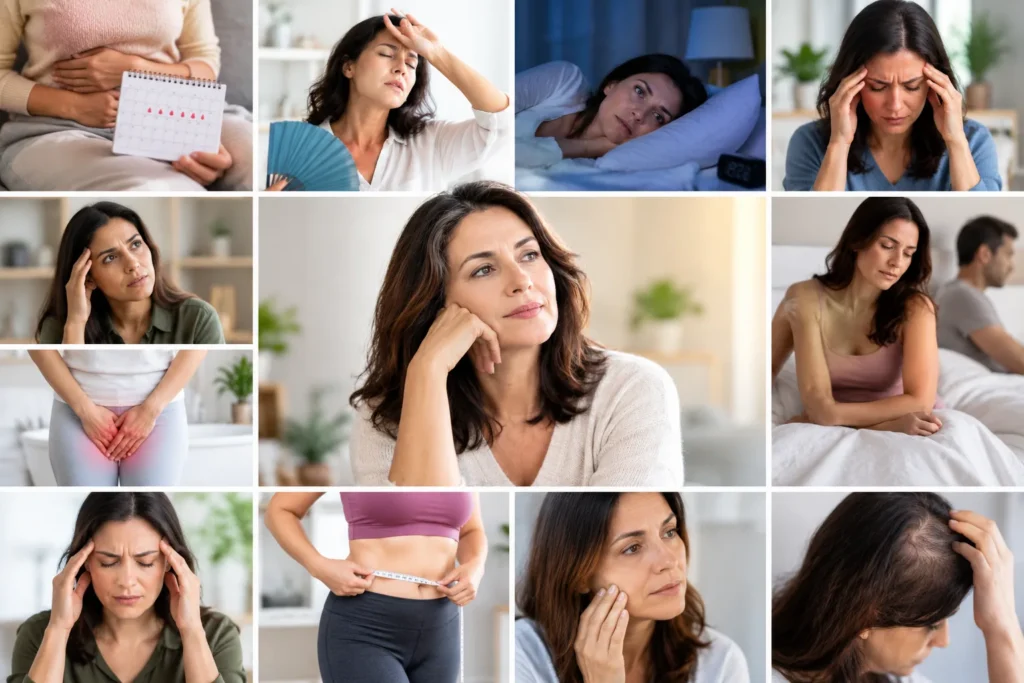
10 Early Signs of Perimenopause
1. Your cycle changes
This is often the first clue. Periods may come closer together or further apart, skip a month, or get lighter or heavier. It happens because your hormones are less predictable and you don’t ovulate every month.
Track it: jot down start and end dates and how heavy the flow is.
Get checked for very heavy bleeding, bleeding between periods, bleeding after sex, or irregular bleeding that won’t settle. Those need to be evaluated, not assumed to be hormones.
2. Hot flashes and night sweats
A sudden wave of heat rushes over your face, neck, and chest — sometimes with sweating, flushing, and a racing heart. Night sweats are the same thing while you sleep, and they can leave your sheets damp. Up to 80% of women get hot flashes at some point during the menopause transition.
What helps: light layers, a cool bedroom, and noticing your triggers (alcohol, spicy food, and heat are common ones). If they’re wrecking your sleep or your day, hormone therapy and non-hormonal medications both work.
3. Sleep goes haywire
You can’t fall asleep, you wake at 3 a.m., or you’re up an hour before your alarm. Night sweats can cause it, but sleep can fall apart even without them — and then your energy, focus, and mood go with it.
What helps: a consistent bedtime, no caffeine after noon, and a cool, dark room.
4. Mood swings, anxiety, or a shorter fuse
More irritable. More anxious for no clear reason. Crying at commercials. Shifting hormones affect brain chemistry, and many women feel blindsided by it. Thyroid problems, poor sleep, and depression can look similar, so it’s worth a real evaluation if it sticks around.
What helps: movement, sleep, stress relief, and people you trust. If it’s affecting your relationships or daily life, treatment can make a big difference.
5. Brain fog
Losing words mid-sentence. Forgetting why you opened the fridge. Struggling to focus on tasks that used to be easy. Hormone swings and poor sleep both play a role. It’s common, and for most women it improves — but sudden, severe, or worsening memory problems need evaluation.
6. Your sex drive shifts
Some women notice desire dropping. Others notice nothing. Lower estrogen, exhaustion, stress, mood, and relationship dynamics all play a part — and if sex has started to feel uncomfortable, that can kill desire fast. This is one of my favorite things to help with, so please don’t be shy about bringing it up.
7. Vaginal dryness or discomfort
As estrogen drops, vaginal tissue can get drier, thinner, and more sensitive. That can mean itching, burning, or pain during sex. You may also need to pee more often or get more UTIs.
What helps: vaginal moisturizers, lube, and prescription treatments like vaginal estrogen. Not every itch is hormonal, though — infections need different treatment.
8. Headaches and migraines change
If you’ve always had headaches around your period, fluctuating estrogen can make them more frequent or change their pattern. Keep a log of when they happen and how bad they are.
Get emergency care for a sudden, severe headache, or one that comes with weakness, confusion, or trouble speaking.
9. Your shape changes
Weight may shift toward your middle, even if your habits haven’t changed. Hormones, muscle loss, sleep, and a slower metabolism all contribute. Focus on protein, strength training, movement, and sleep — and skip the crash diets and the self-blame.
10. Skin and hair changes
Drier skin, thinning hair, or changes in texture can show up as estrogen falls. Thyroid problems, nutrient deficiencies, and genetics can cause these too, so significant hair loss or bald patches deserve a closer look.
When Does It Start?
Most women notice perimenopause in their 40s, but it can start in the late 30s. The average age of menopause in the U.S. is 51. Menopause before 45 is considered early, and before 40 is premature. Genetics, smoking, and cancer treatment can all shift the timing.
There’s no single symptom that confirms it. Some women notice period changes first; others get hot flashes, sleep problems, or mood shifts long before their cycle looks different. If symptoms show up earlier than you expected or are messing with your life, get evaluated, other conditions can look a lot like perimenopause.
How It’s Diagnosed
For most women over 45, perimenopause is diagnosed from your symptoms, age, and cycle history. A single hormone test usually can’t confirm it, because your levels can swing wildly from one day to the next.
Labs are still useful to rule out look-alikes: thyroid problems, anemia, pregnancy, and other causes. They also matter when symptoms start young or don’t fit the usual pattern.
Before your visit, track:
- When your periods start and stop, and how heavy they are
- How often you get hot flashes or night sweats
- Changes in sleep, mood, energy, and desire
- Every medication and supplement you take, including birth control
What Actually Helps
“It’s natural” doesn’t mean you have to white-knuckle it.
Start with the basics:
- Lift weights and move daily. Strength training protects muscle, bone, and metabolism.
- Eat protein and fiber at every meal.
- Protect your sleep. Same bedtime, less late caffeine, a cool room.
- Go easy on alcohol, a common hot flash and sleep trigger.
- Track your symptoms so you can spot patterns.
Then, when symptoms are disrupting your life:
- Hormone therapy is the most effective treatment for hot flashes, night sweats, and many other symptoms. It comes as patches, gels, or pills, and in February 2026 the FDA removed its old boxed warnings about heart disease, breast cancer, and dementia (FDA announcement).
- Non-hormonal medications help hot flashes and mood for women who can’t or don’t want to use hormones.
- Vaginal treatments like low-dose estrogen relieve dryness and painful sex.
The right choice depends on your history, symptoms, and preferences. Please don’t start hormones or “hormone-balancing” supplements without a clinician on your team.
How I Help at Revive
At Revive Institute of Sexual Health, you work directly with me through telehealth, anywhere in Maryland. No ten-minute visits, and no “that’s just aging” brush-offs.
- A thorough first visit about your cycle, sleep, mood, energy, sex life, and goals
- Labs to rule out look-alikes and set a baseline
- A personalized plan, from lifestyle changes to hormone therapy when it fits
- Real follow-through, with labs at three months, then quarterly check-ins as we fine-tune
Care starts with Revive Foundation and continues through Vitality Membership, with sexual wellness built in, because perimenopause affects your relationship too.
You Don’t Have to Just Live With It
If any of this sounds familiar, fill out the contact form at reviveish.com to ask your questions or request a call to book your consult. Let’s get you feeling like yourself again.
This article is for education only and isn’t a substitute for personalized medical advice.